
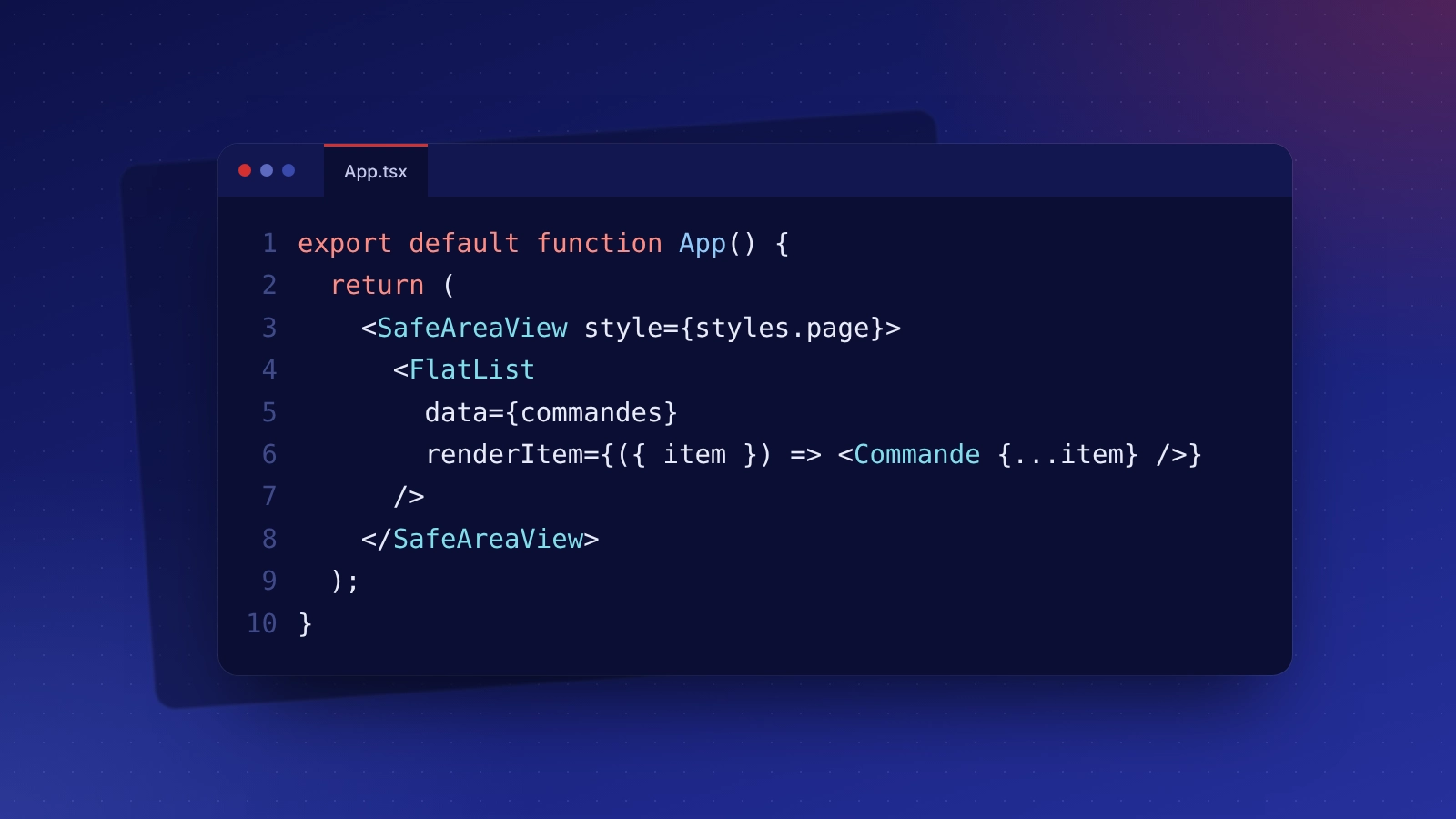
When to choose React Native?
-
You already use React
The same language and habits as your web app: the team moves between the two.
-
iOS and Android together
One project for both platforms.
-
Fast updates
Some fixes can be deployed without waiting for a full new store review.
-
A native interface
Buttons, lists and menus are the system's own: users feel at home.
When it isn't the best choice
For an app with very advanced animations or a strictly identical look on every platform, Flutter may be better suited. And for very specific system features, native (Swift, Kotlin) remains the reference.
What we build with React Native
Mobile version of a web platform
Same accounts, same data, a mobile experience.
Ordering app
Catalogue, basket, payment, delivery tracking.
Community app
Profiles, messaging, notifications.
Internal app
Tools for field teams, connected to your system.
Takeover, migration and maintenance
React Native apps that have not been updated for a long time accumulate version gaps that are hard to close. We plan the upgrade in stages (React Native version, libraries, move to the new architecture), test on real devices and republish to the stores.
Related services and budget
Indicative budget
React Native mobile app from €4,500, Pro plan from €9,000. Associated API or back office from €3,500. Maintenance from €49 per month.
Frequently asked questions: React Native
Partly: business logic, server calls and the team's skills are shared; screens are adapted to mobile.
React Native if you have a React ecosystem; Flutter for an identical look everywhere and a standalone mobile project.
Often yes, with a gradual upgrade. If the gap is too large, a targeted rewrite can cost less: the audit will tell.
We do, using developer accounts created in your name.